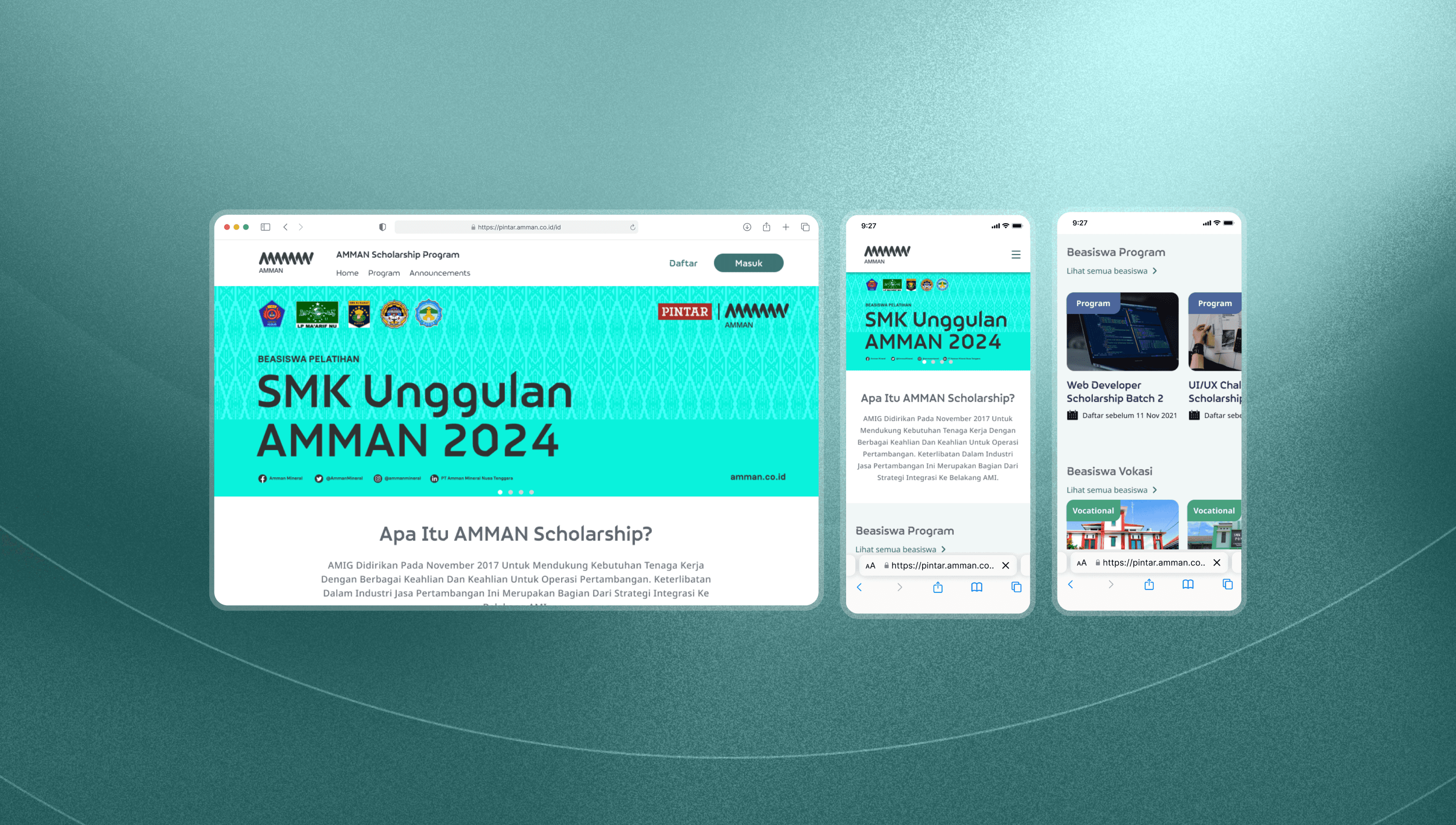
Problems
Right now, we’re running a CSR scholarship program with one organization, and we just finished the first batch using Google Forms. But things are getting busy! Interest in the scholarship is growing fast—our CSR’s client Instagram already got around a hundred likes—and every year, we have 2 batches with hundreds of applications each.
The tricky part? There’s only one person in the operations team handling everything. Sorting applications, checking documents, and keeping track of different majors is a lot to do manually. With more students applying each year, it’s clear that Google Forms just can’t keep up, and something more automatic is needed to make life easier.



Goal
Streamline the applicant management experience for our operations team by allowing them to view all applications in one place, with easy access to data and statistics, so they can manage the scholarship process more efficiently and make decisions faster.
"I handle all the scholarship applications for our CSR program, and right now it’s just me managing everything. I have to check each track per batch separately in Google Forms, download hundreds of responses, and then compile all the data by myself. The client needs a report at the end of every batch, and it’s really stressful."
- Operations Admin for AMMAN Scholarship
Data-driven design
I spent some time with the operations team to see just how tricky it is to filter all the applicants. Seeing the process up close really helped me understand the challenges they face and what they actually need to make their work easier!
How might we provide a single platform for all scholarship batches, so the team can track applicants and generate reports easily?
Applicant Dashboard MVP
Due to time constraints, we took an MVP approach and focused on streamlining the applicant management first. I worked on user flows for the operations team to handle multiple scholarship programs and batches efficiently. The flow included key steps such as reviewing applications, filtering by program or major, and generating batch reports.
To ensure the flow and priorities were well-defined, we held an FGD with other teams and mapped out feature priorities that could be implemented effectively.

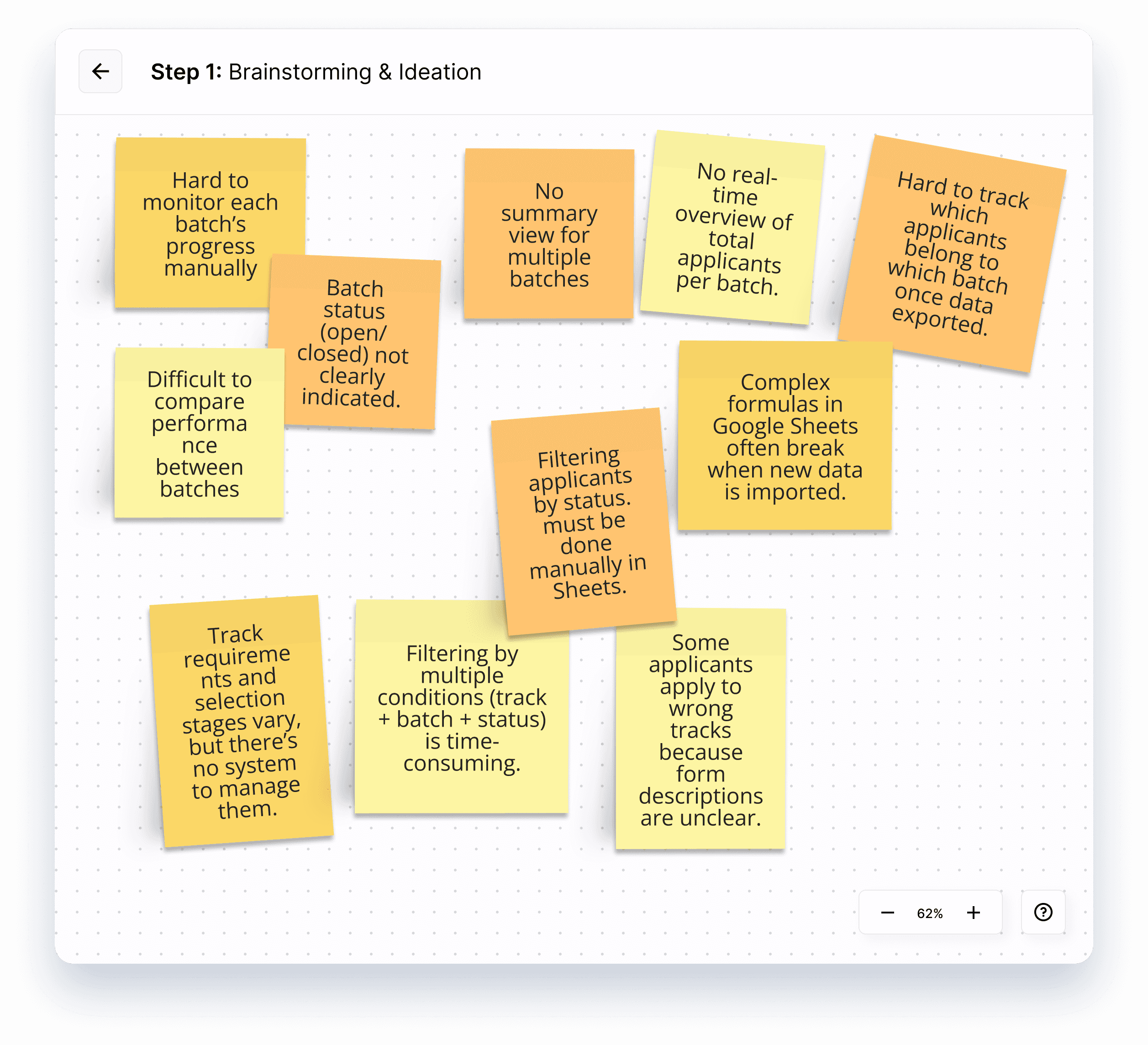
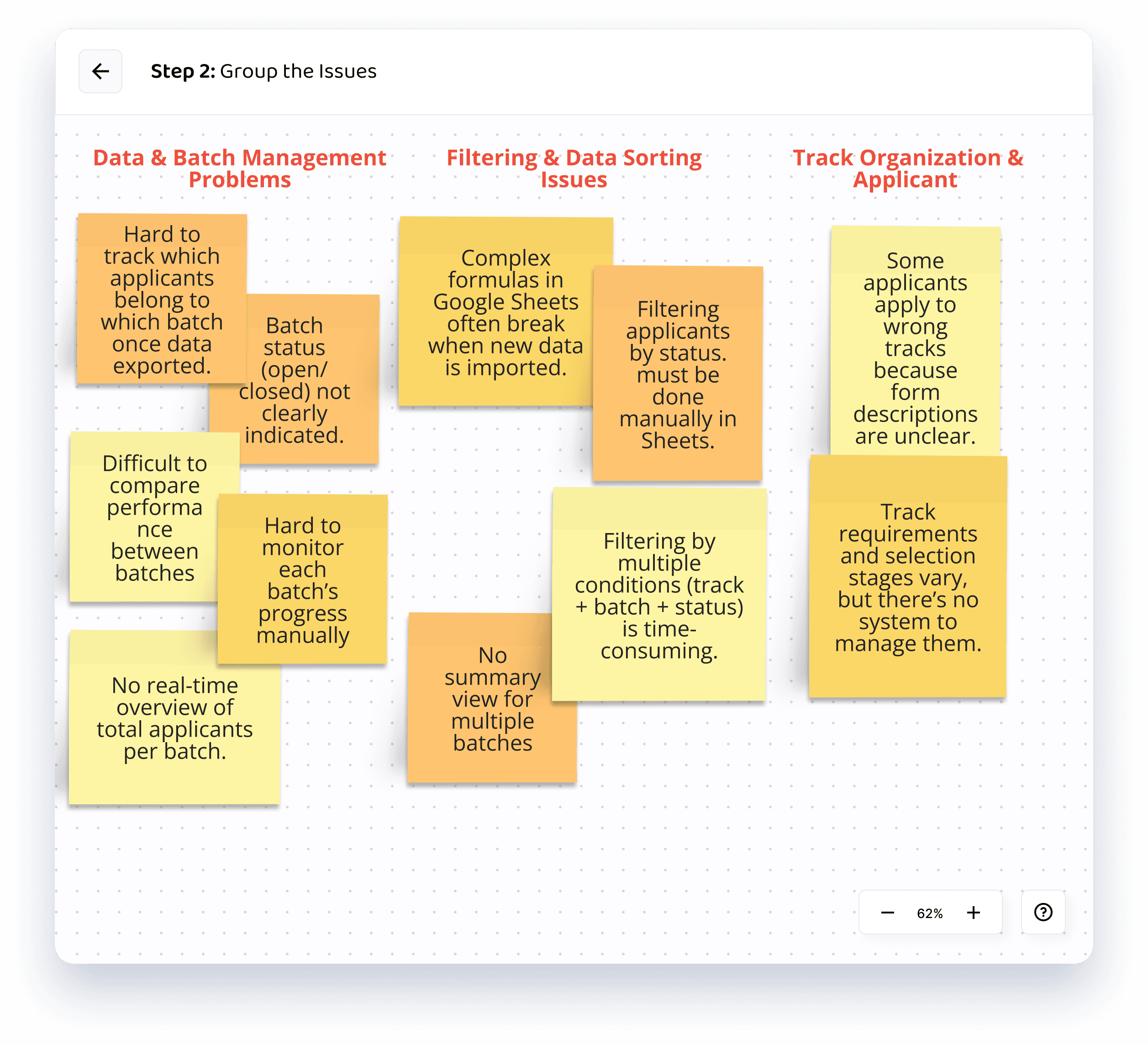
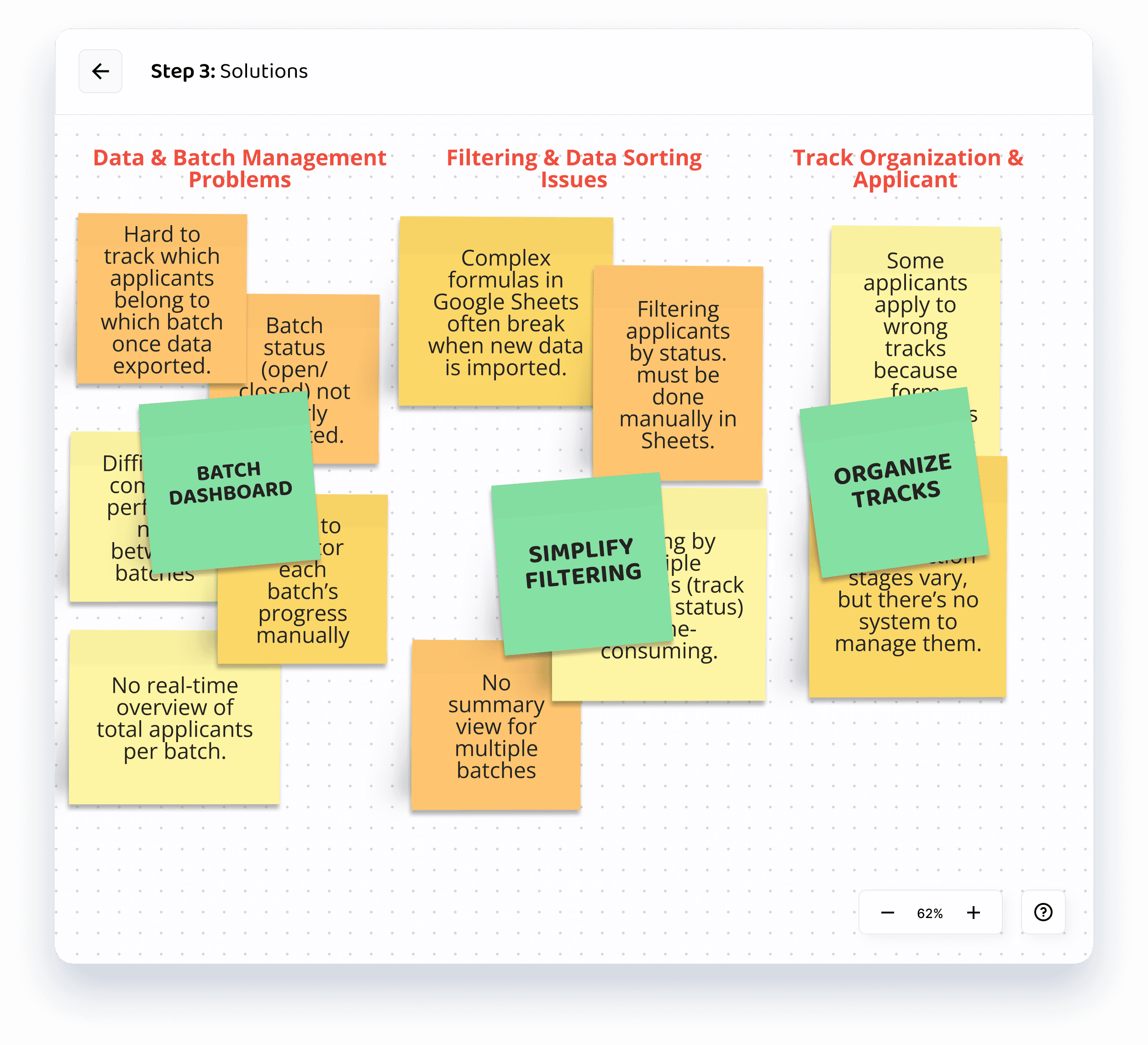
Batch
Dashboard
Simplify
Filtering
Organize
Track
Designing Beyond Constraints
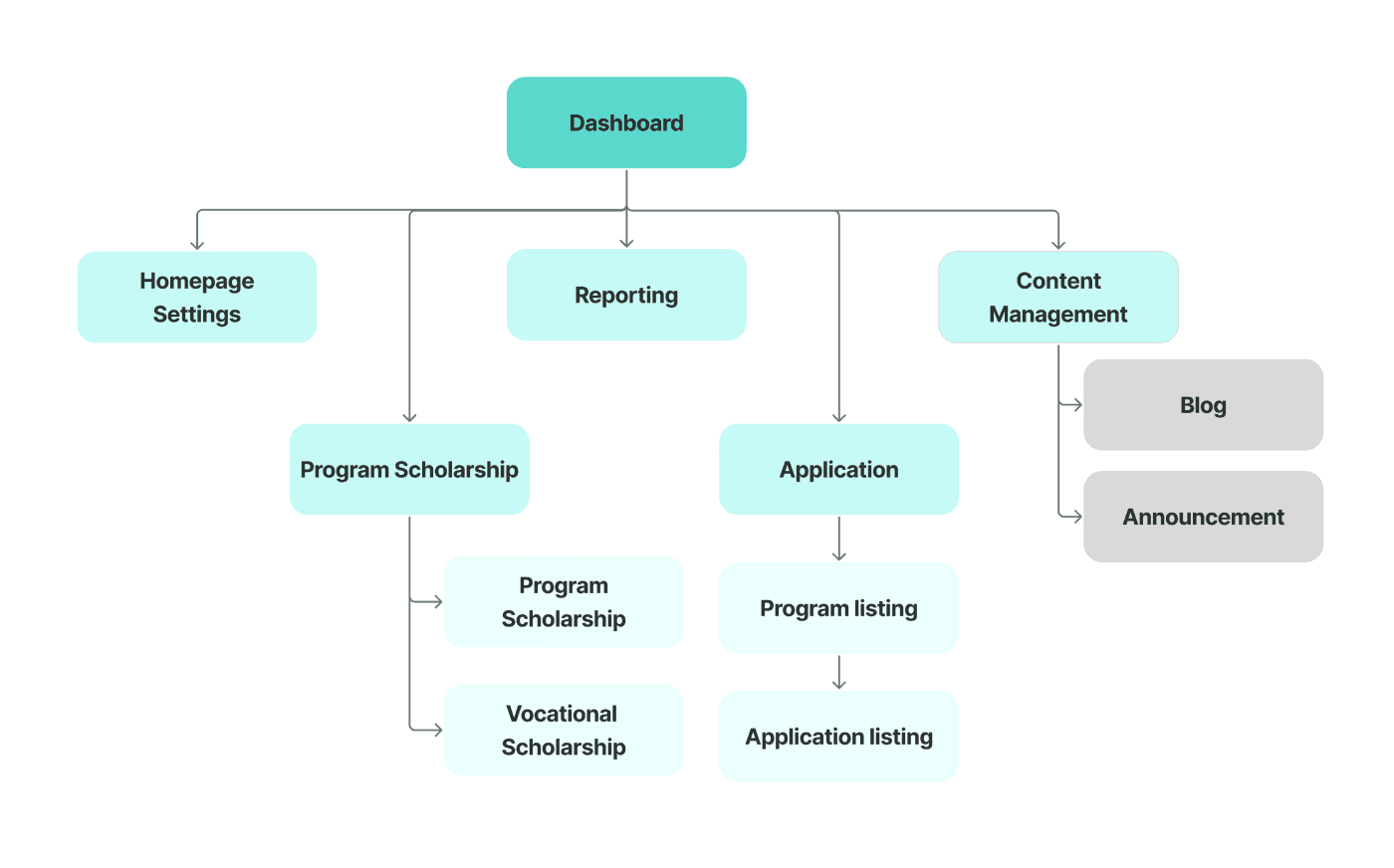
After the FGD and additional sessions with the operations team, I explored new concepts to improve the end-to-end applicant management experience. I designed user flows for both scholarship applicants (users) and admins to ensure a smooth and efficient experience on both sides.

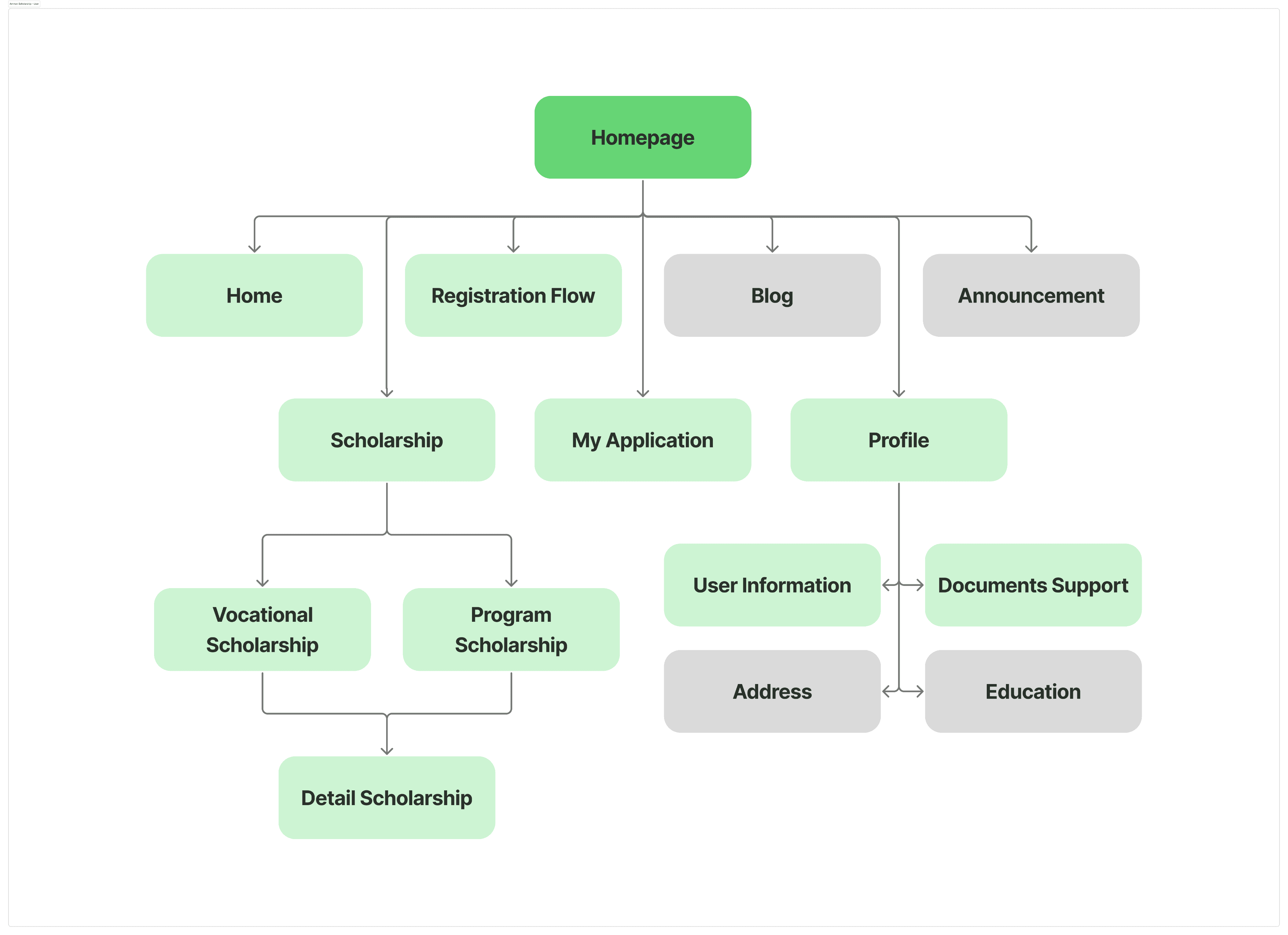
For the user side, the main focus was to encourage applicants to complete their profiles before applying for scholarships, ensuring data consistency and reducing administrative errors. The interface was designed to guide users step-by-step, making the process intuitive and less overwhelming.
For the admin side, I created flows and interfaces that streamline reviewing applications, managing eligibility, and monitoring applicant progress—helping administrators handle large volumes of submissions efficiently.
Key Improvements
Despite being an MVP, it greatly contributes to long-term operational improvement